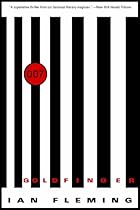
From Library JournalThe allure of James Bond was best described by Raymond Chandler, who insisted that 007 is "what every man would like to be and what every woman would like to have between her sheets." Who can argue with that? This month marks the 40th anniversary of the film release of Dr. No, which was the first Bond adventure to make the big screen, and two big coffee-table books are being published to honor the occasion (LJ 10/1/02, p. 96). Shockingly, Fleming's original novels have gone out of print, but Penguin here reproduces a trio of the British secret agent's early outings, released in 1952, 1958, and 1959, respectively, sporting stylish cover art. These stories were racy for the nifty Fifties but are quite tame by today's standards. Still, they can be fun. Copyright 2002 Reed Business Information, Inc.About the AuthorIan Fleming was born in London on May 28, 1908. He was educated at Eton College and later spent a formative period studying languages in Europe. His first job was with Reuters News Agency where a Moscow posting gave him firsthand experience with what would become his literary bete noirethe Soviet Union. During World War II he served as Assistant to the Director of Naval Intelligence and played a key role in Allied espionage operations. After the war he worked as foreign manager of the Sunday Times, a job that allowed him to spend two months each year in Jamaica. Here, in 1952, at his home Goldeneye, he wrote a book called Casino Royaleand James Bond was born. The first print run sold out within a month. For the next twelve years Fleming produced a novel a year featuring Special Agent 007, the most famous spy of the century. His travels, interests, and wartime experience lent authority to everything he wrote. Raymond Chandler described him as the most forceful and driving writer of thrillers in England. Sales soared when President Kennedy named the fifth title, From Russia With Love, one of his favorite books. The Bond novels have sold more than one hundred million copies worldwide, boosted by the hugely successful film franchise that began in 1962 with the release of Dr. No. He married Anne Rothermere in 1952. His story about a magical car, written in 1961 for their only son Caspar, went on to become the well- loved novel and film Chitty Chitty Bang Bang. Fleming died of heart failure on August 12, 1964, at the age of fifty-six.Excerpt. Reprinted by permission. All rights reserved.1. REFLECTIONS IN A DOUBLE BOURBON James Bond, with two double bourbons inside him, sat in the final departure lounge of Miami Airport and thought about life and death. It was part of his profession to kill people. He had never liked doing it and when he had to kill he did it as well as he knew how and forgot about it. As a secret agent who held the rare double-0 prefixthe licence to kill in the Secret Service - it was his duty to be as cool about death as a surgeon. If it happened, it happened. Regret was unprofessionalworse, it was death watch beetle in the soul. And yet there had been something curiously impressive about the death of the Mexican. It wasn't that he hadn't deserved to die. He was an evil man, a man they call in Mexico a capungo. A capungo is a bandit who will kill for as little as forty pesos, which is about twenty-five shillingsthough probably he had been paid more to attempt the killing of Bondand, from the look of him, he had been an instrument of pain and misery all his life. Yes, it had certainly been time for him to die; but when Bond had killed him, less than twenty-four hours before, life had gone out of the body so quickly, so utterly, that Bond had almost seen it come out of his mouth as it does, in the shape of a bird, in Haitian primitives. What an extraordinary difference there was between a body full of person and a body that was empty! Now there is someone, now there is no one. This had been a Mexican with a name and an address, an employment card and perhaps a driving licence. Then something had gone out of him, out of the envelope of flesh and cheap clothes, and had left him an empty paper bag waiting for the dustcart. And the difference, the thing that had gone out of the stinking Mexican bandit, was greater than all Mexico. Bond looked down at the weapon that had done it. The cutting edge of his right hand was red and swollen. It would soon show a bruise. Bond flexed the hand, kneading it with his left. He had been doing the same thing at intervals through the quick plane trip that had got him away. It was a painful process, but if he kept the circulation moving the hand would heal more quickly. One couldn't tell how soon the weapon would be needed again. Cynicism gathered at the corners of Bond's mouth. 'National Airlines, Airline of the Stars', announces the departure of their flight NA 106 to La Guardia Field, New York. Will all passengers please proceed to gate number seven. All aboard, please.' The Tannoy switched off with an echoing click. Bond glanced at his watch. At least another ten minutes before Transamerica would be called. He signalled to a waitress and ordered another double bourbon on the rocks. When the wide, chunky glass came, he swirled the liquor round for the ice to blunt it down and swallowed half of it. He stubbed out the butt of his cigarette and sat, his chin resting on his left hand, and gazed moodily across the twinkling tarmac to where the last half of the sun was slipping gloriously into the Gulf. The death of the Mexican had been the finishing touch to a bad assignment, one of the worstsqualid, dangerous and without any redeeming feature except that it had got him away from headquarters. A big man in Mexico had some poppy fields. The flowers were not for decoration. They were broken down for opium, which was sold quickly and comparatively cheaply by the waiters at a small cafe in Mexico City called the 'Madre de Cacao'. The Madre de Cacao had plenty of protection. If you needed opium you walked in and ordered what you wanted with your drink. You paid for your drink at the caisse and the man at the caisse told you how many noughts to add to your bill. It was an orderly commerce of no concern to anyone outside Mexico. Then, far away in England, the Government, urged on by the United Nations' drive against drug smuggling, announced that heroin would be banned in Britain. There was alarm in Soho and also among respectable doctors who wanted to save their patients agony. Prohibition is the trigger of crime. Very soon the routine smuggling channels from China, Turkey and Italy were run almost dry by the illicit stockpiling in England. In Mexico City, a pleasant-spoken Import and Export merchant called Blackwell had a sister in England who was a heroin addict. He loved her and was sorry for her and, when she wrote that she would die if someone didn't help, he believed that she wrote the truth and set about investigating the illicit dope traffic in Mexico. In due course, through friends and friends of friends, he got to the Madre de Cacao and on from there to the big Mexican grower. In the process, he came to know about the economics of the trade, and he decided that if he could make a fortune and at the same time help suffering humanity he had found the Secret of Life. Blackwell's business was in fertilisers. He had a warehouse and a small plant and a staff of three for soil testing and plant research. It was easy to persuade the big Mexican that, behind this respectable front, Blackwell's team could busy itself extracting heroin from opium. Carriage to England was swiftly arranged by the Mexican. For the equivalent of a thousand pounds a trip, every month one of the diplomatic couriers of the Ministry of Foreign Affairs carried an extra suitcase to London. The price was reasonable. The contents of the suitcase, after the Mexican had deposited it at the Victoria Station left-luggage office and had mailed the ticket to a man called Schwab, c/o Boox-an-Pix, Ltd, WCI, were worth twenty thousand pounds. Unfortunately Schwab was a bad man, unconcerned with suffering humanity. He had the idea that if American juvenile delinquents could consume millions of dollars' worth of heroin every year, so could their Teddy boy and girl cousins. In two rooms in Pimlico, his staff watered the heroin with stomach powder and sent it on its way to the dance halls and amusement arcades. Schwab had already made a fortune when the CID Ghost Squad got on to him. Scotland Yard decided to let him make a little more money while they investigated the source of his supply. They put a close tail on Schwab and in due course were led to Victoria Station and thence to the Mexican courier. At that stage, since a foreign country was concerned, the Secret Service had had to be called in and Bond was ordered to find out where the courier got his supplies and to destroy the channel at source. Bond did as he was told. He flew to Mexico City and quickly got to the Madre de Cacao. Thence, posing as a buyer for the London traffic, he got back to the big Mexican. The Mexican received him amiably and referred him to Blackwell. Bond had rather taken to Blackwell. He knew nothing about Blackwell's sister, but the man was obviously an amateur and his bitterness about the heroin ban in England rang true. Bond broke into his warehouse one night and left a thermite bomb. He then went and sat in a cafe a mile away and watched the flames leap above the horizon of rooftops and listened to the silver cascade of the fire-brigade bells. The next morning he telephoned Blackwell. He stretched a handkerchief across the mouthpiece and spoke through it. ' Sorry you lost your business last night. I'm afraid your insurance won't cover those stocks of soil you were researching.' 'Who's that? Who's speaking?' 'I'm from England. That stuff of yours has killed quite a lot of young people over there. Damaged a lot of others. Santos won't be coming to England any more with his diplomatic bag. Schwab will be in jail by tonight. That fellow Bond you've been seeing, he won't get out of the net either. The police are after him now.' Frightened words came back down the line. 'All right, but just don't do it again. Stick to fertilisers.' Bond hung up. Blackwell wouldn't have had the wits. It was obviously the big Mexican who had seen through the false trail. Bond had taken the precaution to move his hotel, but that night, as he walked home after a last drink at the Copacabana, a man suddenly stood in his way. The man wore a dirty white linen suit and a chauffeur's white cap that was too big for his head. There were deep blue shadows under Aztec cheekbones. In one corner of the slash of a mouth there was a toothpick and in the other a cigarette. The eyes were bright pin-pricks of marihuana. 'You like woman? Make jigajig?' 'No.' 'Coloured girl? Fine jungle tail?' No.' 'Mebbe pictures?' The gesture of the hand slipping into the coat was so well known to Bond, so full of old dangers that when the hand flashed out and the long silver finger went for his throat. Bond was on balance and ready for it. Almost automatically, Bond went into the 'Parry Defence against Underhand Thrust' out of the book. His right arm cut across, his body swivelling with it. The two forearms met mid-way between the two bodies, banging the Mexican's knife arm off target and opening his guard for a crashing short-arm chin jab with Bond's left. Bond's stiff, locked wrist had not travelled far, perhaps two feet, but the heel of his palm, with fingers spread for rigidity, had come up and under the man's chin with terrific force. The blow almost lifted the man off the sidewalk. Perhaps it had been that blow that had killed the Mexican, broken his neck, but as he staggered back on his way to the ground, Bond had drawn back his right hand and slashed sideways at the taut, offered throat. It was the deadly hand-edge blow to the Adam's apple, delivered with the fingers locked into a blade, that had been the standby of the Commandos. If the Mexican was still alive, he was certainly dead before he hit the ground. Bond stood for a moment, his chest heaving, and looked at the crumpled pile of cheap clothes flung down in the dust. He glanced up and down the street. There was no one. Some cars passed. Others had perhaps passed during the fight, but it had been in the shadows. Bond knelt down beside the body. There was no pu... what is a good book to read right now Goldfinger (James Bond)
2 of 2 people found the following review helpful. The coppertoned villainBy BOBWith Goldfinger Ian Fleming raised the stakes for villains with absurd memorable names to match physical qualities that also set them apart from law-abiding people. Golden-hued Goldfinger, human sledgehammer Oddjob and Pussy Galore (more about her later) ensured that much of the general public that hadnt read a James Bond book would at least be conversant with many of the Fleming trademarks much as those who have never read Charles Dickens can merely hear the names Ebenezer Scrooge or Martin Chuzzlewit or Fagan and acquire a general impression of the tone of his work.Goldfinger begins promisingly enough. Bond is stranded in Miami and meets a man he barely remembers who witnessed his Casino Royale triumph over SMERSH embezzler Le Chiffre in the first Bond book. This man unwittingly introduces him to his next diabolical villain. It quickly becomes apparent that Goldfinger is not only the richest man in England already but possesses a pathological lust for gold and will lie, cheat and steal to acquire more of it.It is not surprising that Goldfinger is another SMERSH operative (actually more of a freelance criminal that merely sees them as another way station on his route to even more spectacular wealth). When Bond reports back to M in London he is informed that Goldfinger has been surreptitiously ferreting gold out of England, melting it down and recasting it in his Swiss factory. Until the point that Bond is captured and strapped down with a chainsaw heading between his legs the novel is on pretty secure footing.Suddenly the plot takes an unconvincing turn. Goldfinger is yet another talking villain who makes the fatal mistake of sparing Bonds life, thinking that he can bend Bonds will to serve his nefarious purposes. Not only has Goldfinger passed up a handful of opportunities to simply execute Bond and go on about his plans but he stops to explain those plans, fueling Bonds survivalist mind with his own plans for escape. Goldfingers master crime is a massive heist of all the gold in Ft. Knox. It sounds absurd and no amount of Flemings clever and eloquent exposition ever convinces me that such a plan could ever work, even in the outrageous universe of James Bond.The last quarter of the novel is chaotic. It is as though Fleming had taken his time unfolding a brilliant setup, realized he was closing in on his word limit and frantically wrapped up the story somewhat messily. His gift for describing environments and how they figure in with villains scheme and how Bond defeats villain and escapes relatively unscathed abandons him here. Juxtaposition is choppy and Fleming speeds from one unfinished action piece to the next. Goldfinger and his men are embarking on Ft. Knox. Is the population of Ft. Knox already dead? Goldfinger revealed to Bond that the substance he slipped into the water supply was deadly, not merely a strong sleeping potion. Suddenly the cavalry arrives in the form of U.S. troops and trusty C.I.A. ally Felix Leiter. Has the day been saved? Not quite so fast. Bond is heading home on B.O.A.C. airlines and suddenly realizes Goldfinger, Oddjob and Pussy have hijacked the plane. Huge Oddjob is sucked out the window that Bond has shattered (were airplane windows so easily broken even in 1959?) like a massive tube of toothpaste. Pussy decides to ally herself with Bond and Bond chokes the life out of Goldfinger. Altogether a fairly quick, messy resolution.This is actually the rare instance in which the film actually improved on the novel. The unfolding of the plot in the film was far more believable and logical (within the context of the Bond universe). Homosexuality (specifically lesbianism) is addressed in the novel through the common view that it was an aberration. Pussys conversion to heterosexuality by the irresistible James Bond is no more convincing in the novel than it is in the film. Pussy is a paper thin character, uttering Hello Handsome and Brooklynese wise girl criminal clichs before suddenly deciding she will aid Bond. The memorable image of the gold-painted girl is not dramatized but recounted by the girls vengeful sister.Goldfinger is a seminal James Bond book primarily because it serves as a gateway to the world of Bond and possesses all of the characteristics that most people associate with the series. As a novel, it is flawed and messy, certainly in relation to its two brilliant predecessors, From Russia With Love and Dr. No. It provided filmmakers with the raw material to make a superior film that would translate the books into film while solidifying a formula that certainly possesses longevity.0 of 0 people found the following review helpful. Memorable Bond CaperBy Van T. RobertsThe seventh novel in the Ian Fleming James Bond series is quite good, while the big-screen cinematic adaptation is only marginally superior. Unlike some 007 escapades, "Goldfinger" was rather audacious for its time. The Bank of England is losing gold, and the Bank has determined through its own investigation that Goldfinger is the wealthiest man in England. The problem is that Goldfinger is smuggling vast amounts out of the country to India where he can sell it for greater profits. The British Secret Service dispatches Bond to shadow Goldfinger. Interestingly enough, Bond has encountered Goldfinger before he is assigned to follow him. At the outset of the novel, Bond is sitting in the Miami Airport Terminal, reflecting on having killed a Mexican drug thug when Mr. DuPont approaches him out of the blue. DuPont remembers Bond from their meeting in France in the first Bond novel "Casino Royal" and asks him to help him with a private matter. DuPont is being taken to the cleaners by a man who never seems to lose, and he wants to know if Bond can figure out how his adversary is beating him so consistently at cards. This sounds a little like M's request in "Moonraker" when he wants Bond to figure out how Sir Hugo Drax has won so much without losing. Bond discovers that Goldfinger is cheating DuPont because he has a beautiful girl in the hotel room above them looking at DuPont's cards and relaying the information to Goldfinger by means of a rake hearing aid. Bond shatters Goldfinger's spree. Anyway, Goldfinger plans the crime of the century, takes Bond hostage, and forces him to work with him or suffer the penalty of death. Goldfinger wants to knock over Fort Knox and invites the major crime bosses in America to join him. The heist is incredible, and it is different from the one in the Sean Connery movie. Goldfinger's Korean bodyguard Oddjob is in the book and he has his deadly bowler hat. Fleming writes concisely, but the golf game between 007 and he is for golf enthusiasts only. Yes, the lesbian crime gal Pussy Galore appears, but she runs an army of chat burglars instead of a flying circus as in the movie. The novel "Goldfinger" with its ambitious caper ranks as one of the more imaginative Bond novels. I have read it three times now and still love it.1 of 1 people found the following review helpful. Simply one of THE best James Bond novels.By Steven JaynesI've been reading and listening to the James Bond books in order. First I read and listen to the novel, then watch the movie. It's been a very entertaining experience.The Goldfinger movie follows the book's plot with some subtle and some not so subtle differences. However, the movie is an excellent adaptation of the novel.The character development is much better in the book. It got both the Kindle book and the Audible recording. It was a great listen after reading the book so many years ago. When there is a really good scene, I'll break away from the recording and read it first. Then come back to the recording. It really gives you an interesting perspective on how your brain processes the written vs. spoken word for the same story. I'll probably listen again in a year or so. It was that good.I feel it's good to get a couple of the very early Bond books read or listened to, before reading Goldfinger. It helps you understand the Bond character much better. Fleming only brushes lightly on Bond's background in each subsequent book, so it's nice to have the perspective of the early titles to fill in the mental blanks.Bond, James Bond..... What an iconic line!