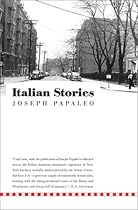
From Publishers Weekly"Where are we, then?" is the question posed by Michael Joseph Spinelli, the narrator of one of the loosely connected stories in Papaleo's fourth book. A self-described wanderer in life following a stint during WWII and then college, Spinelli tries to make some sense of his Italian-American heritage: a father whose success in the raincoat business moved the family from the Bronx to Scarsdale, a traditional mother in charge of the cooking and shopping, an older brother who drives a truck for a living. Moving roughly chronologically, the earlier stories are set in a 1940s Bronx neighborhood of Italian immigrants. A number of tales featuring Johnny Mauro as a child and teen are subtly evocative, describing his relationship with parents from the Old World who are making a place for themselves in New York while they contend with friends and relatives who are less able (or willing) to assimilate. After the war, various male characters ponder the daily minutiae of business dealings, travels, marriages and the deaths of parents. While the portrayal of ethnic unease and adjustment is realistic, it becomes difficult to keep track of characters who are similar (many of the men are prone to lengthy business conversations and are crudely breast-obsessed) or make repeat appearances. The prologue issues an amusing warning against expecting stereotypes ("I forgive you your Chef Boyardee, your worship of gangsters you think are my brothers"), which is all to the good, but judicious honing would have sharpened the sprawl of this collection, deepened its quiet homage to Italian-Americans and suggested some answers to Spinelli's big question. Copyright 2002 Cahners Business Information, Inc.From Library JournalPapaleo's appealing stories of an Italian community in the Bronx of the 1930s and 1940s highlight the universality of his characters' experiences, which could just as well take place in Armenian, Irish, or other ethnic communities in America. Many of these stories are about the loss of the immigrant community and its traditions as new generations become more Americanized and move out of the neighborhood. In "Homes and Rooms," Lucky returns from Rome, where his job often takes him, to find that his best friend, Jack, has died without Lucky's knowing about it. Lucky thinks about Jack and his getting married and having a family, "unable to try anything else while Lucky got the international job and got away to Europe." Lucky's ambivalence about the old ways vs. his more sophisticated ones tells the story of a community disintegrating. As Papaleo (All the Comforts, Out of Place) says in the prolog, "There will be no deceit or trickery in this volume and no plot, character, conflict. Just my screaming voice telling you the truth." Recommended for all venues. Patricia Gulian, South Portland, MECopyright 2002 Cahners Business Information, Inc. "Papaleo's appealing stories of an Italian community in the Bronx of the 1930s and 1940s highlight the universality of his characters' experiences, which could just as well take place in Armenian, Irish, or other ethnic communities in America."--Library Journal what are the 10 most popular books Italian Stories (American Literature (Dalkey Archive))
0 of 0 people found the following review helpful. Treat yourselfBy G. DouglasAuthor was a wonderful man. He was a teacher, and I was fortunate to have him as a 5th grader, and again in my junior year of high school. He was also a wonderful storyteller. Left us far too soon.0 of 0 people found the following review helpful. MehBy CHUCKNot very good, in my opinion.0 of 0 people found the following review helpful. "Just My Screaming Voice Telling You The Truth"By Annie Lanzillotto author of L is for Lion"no plot, no conflict.... just my screaming voice telling you the truth"so Joe Papaleo promises us as this book opensand so he delivers.I had the grand fortune of having Joe Papaleo as my mentor at Sarah Lawrence Collegeand he taught me what it is to be Italo-American. At Sarah Lawrence, each student gets a "Don"a one-on-one mentor... I think they took the term from Oxford... and surely not The Godfather.Nevertheless there were Joe and I on this campus... and I got to call him "Don Giusepp"A term of respect.He unwound gender roles and stereotypes, explained machismo,and he was the very first Italian American intellectual I ever met.And he changed my life. Showed me who to go to downtown,Bob Viscusi and iawa (Italian American Writers Association)and start me on my professional path and into a community.Joe's personal letters are among my dearest possessions on earth.Read his books! He is a pillar in Italian American Literatureforever,AnnieAnnie Lanzillottoauthor of "L is for Lion: an italian bronx butch freedom memoir" SUNY Pressand "Schistsong" BORDIGHERA Presswww.annielanzillotto.comL Is for Lion: An Italian Bronx Butch Freedom Memoir (SUNY series in Italian/American Culture)Schistsong (Via Folios)Blue PillCarry My Coffee (Live)Eleven Recitations