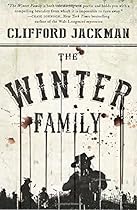
Longlisted for the 2015 Giller PrizeCalculating and poetic. . . holds you with a compelling brutality from whichit is impossible to turn away.--Craig Johnson,New York Timesbestsellingauthor of the Walt Longmire mysteriesCapable of standing in [Cormac McCarthys] company, which is high praise indeed.The Winter Familyis a philosophical spaghetti western that doesnt stint on the tomato sauce, served up with flair. Quill Quire (starred review) Sadistic but mesmerizing. . . . From the first rifle shot to the last burned body. The New York Times Book Stink and filth, corruption and depravity, lawlessness and unruliness. . . . [Augustus Winter is] as fascinating as any other complicatedly deadly thing. The Globe and MailThe adventures of a gleefully nihilistic group of outlaws. . . . Brutal, at times darkly funny, and utterly gripping from the first page to the last. Scott Smith,New York Timesbestselling author ofA Simple PlanandThe Ruins A blood-soaked historical western covering over three decades of mayhem. . . . [A] vivid portrayal of men who choose violence and lawlessness as their way of life, and the justifications they create to rationalize their immoral behavior. This is a chilling tale. Publishers Weekly A wild ride into the conflict between freedom and civilization written in brains and blood. . . . This book is a round house punch of awesome. It came out of nowhere and tackled me into the dirt. Michael D. Griffiths, SFReader.com Enormously enjoyable. Literary of Canada Satisfyingly violent. The Toronto Star Bloodletting as philosophical exercise, and not for the faint of heart. Kirkus s Brutal. Nihilistic. Extreme.Clifford Jackman's debut,The Winter Family, lit my synapses up like a pinball machine. I joined golden-eyed Augustus Winter and his band of merry sociopaths on their journey through the dying West, civilization squeezing in from every anglethis isa raw, blood-splattered picaresquethat I enjoyed immensely.Jackman throws nine kinds of hell at you in this book,unloading with both barrels, and never lets up the intensity. Craig Davidson, author ofCataract CityAbout the AuthorClifford Jackman was born in Deep River, Ontario, and grew up in Ottawa. He studied English literature at York University and Queens University before attending Osgoode Hall Law School and being called to the bar in 2008. HelivesinGuelph, Ontario, with his wife, Cathy, and his son, Anthony.Excerpt. Reprinted by permission. All rights reserved.Prologue: Oklahoma 18891High summer night in Oklahoma. Warm winds that smelled of apple blossoms. Now and then a lightning bug winked on and drifted through the air. Quentin Ross caught one in his fist and held it there, its radiance leaking between his fingers and reflecting in his shallow eyes. For a moment he rolled the lightning bug between his thumb and forefinger, and then he crushed it, smearing himself with its luminescence, and he smiled, wide and empty.The Winter Family was camped in a stand of blackjack oaks. There was no fire but the moon was up, pushing the stars back into the darkness of the sky. Charlie and Johnny Empire lay on their sides, playing cards and bickering. Fred Johnson wrote in his little book and drank whiskey from a cup not much bigger than a thimble. Quentin wandered from tree to tree, humming to himself, soft and tuneless. The others tried to sleep, tucked between tree roots or curled in bedrolls like pill bugs. All of them, except for Augustus Winter.He sat astride a pale horse, like Death, leaning back in his heavy saddle and smoking a cigarette in an ivory holder. The suit he wore was well tailored but growing threadbare. His straw-white hair was cropped short and he had an extravagantly waxed mustache. His eyes were very light amber, almost yellow, the eyes of an eagle or a cat. Occasionally he would remove a watch from his pocket and glance at it, turning it in the pale moonlight, watching as the second hand marched around, and around, and around.It is often observed that murderers do not look like murderers. No one said that of Augustus Winter.A little after midnight Winter cocked his head. Theyre coming.I dont hear anything, Quentin said.But soon they all did. The sleepers were kicked and prodded into wakefulness, the lantern shuttered, weapons drawn, instructions whispered.OShea and two of his hands came around the bend and rode up to the camp. Everyone relaxed. OShea pulled up his horse, unstrapped a bag tied to his saddle, and tossed it to Quentin.Id be grateful if you count it now, OShea said.Quentin knelt down, opened the sack, and rifled through the bills quickly. Then he stood, his knees creaking.Yes, its all there, as we agreed.Good, OShea said and began to wheel his horse around.Now just a moment, Mister OShea, Quentin called out. Please, just a moment more. Quentins voice was very deep, melodious. He spoke slowly, as if he were thinking very carefully, or reciting poetry.OShea turned back to him, reluctantly. Both men were around fifty, but OShea was a tall man with a healthy mane of gray hair, while Quentin was small and fine boned.Weve run into some unexpected expenses ..., Quentin began.Oh god damn you, OShea said.Quentin continued as if OShea had not spoken.... which were not included in the initial estimate of our--Estimate? OShea shouted. We had a deal, you thieves.Yeah, Winter said. He did not speak loudly but all the men fell silent, and the bugs too, and the wind seemed to die down to nothing. Yeah. Thieves, Mister OShea. And worse.OShea looked at Winter and bore his gaze. That was something not every man could do. OShea was not like every man. Willpower radiated from him. And he was angry now. He looked at the dirty mob of killers under the trees, white trash and blacks and Mexicans, in their muddy boots and sweat-stiff dusters, thin and poor and dumb as nails. One of them was using baler twine as a rifle strap. He thought: Am I to let these men get the better of me? But then, it was only money.How much? OShea asked. Quentin told him. OShea nodded and said, The money will be ready when you get back. I trust that is all. Not a question.But Quentin said, Just one more thing, Mister OShea! Please! One more thing. A member of our band has taken ill. He needs a doctor. We would be grateful if you could bring him back to town.Oh for heavens sake, OShea snapped, but they were already bringing the sick man forward, surprisingly small, wrapped up tightly in a stinking bedroll. OShea stood up in his stirrups and looked down. He frowned. The man was an Indian, but his skin had gone gray and seemed thin, as if his bones were likely to poke through at any moment. Greasy foam flecked around his lips and nose and the whites of his eyes were jaundiced, the color of egg yolk.The little Indian regarded OShea with piteous weakness. OShea frowned in disgust.His name is Bill Bread, Quentin said.One of you take him, OShea said to his hands.Farewell, Mister OShea, Quentin called, and tipped his hat. Take good care of Mister Bread!The Winter Family laughed as the hands threw Bill Bread over the neck of one of their sturdy ponies and rode off, holding their noses. They all laughed, except for Augustus Winter, who watched OSheas horse in the dim moonlight, until it was lost in the trees.2The next morning, Bill Bread was awoken by a strange, high laugh like the call of an asthmatic loon. When he opened his eyes he did not know where he was. A small, clean room with a glass window and wallpaper printed with rocking horses and flowers. The bed was high off the ground and soft.A crippled boy stood in the doorframe, wearing short pants and suspenders and a shirt with a collar. Large, thick spectacles were strapped to his face with a black cord. When Bill looked at the boy, the boy averted his gaze to the ground, then the window, the foot of the bed, anywhere but Bill.Where am I? Bill tried to say, but his throat was dry.The boy let out that distinctive laugh again then limped away, leaning on a pair of canes.Hes awake! Yes! Hes awake now. Awake! the boy said.Heavy footsteps. A tall man appeared in the door, bald, with shaggy white sideburns.Mister Bread, was it? the man said.Bill nodded.Im Doctor Simpson. Do you pretend not to know what has made you ill?Bill closed his eyes.If it is a lecture you fear, let me set your mind at ease. I dont waste them on men like you. I will only urge you to stay away from the Keeley Institute. Their gold cure for drunkenness is fraudulent. You will be dead in six months anyway; in the meantime, stay away from them.Six months?If you want to live, you know what to do.Yeah, Bill said. I just dont know how.Oh, you know how, the doctor said. If youll pardon me for saying so, there is nothing complicated about how to stop pouring whiskey down your throat. You know how, of course you do, but you dont know why. Do you, Mister Bread? The doctor regarded Bill as if he did not entirely consider the question to be rhetorical, or perhaps simply to admire the effect of his own words. Either way he was disappointed. Bill said nothing.Sleep and water, the doctor said. Mister Bread, good morning.The doctor tromped out of the room. Bill heard that queer laugh one more time, and then the house was quiet.He lay still but he could not sleep. Despite the pounding in his head and the terrible painful nausea radiating through his stomach, a strange energy, a lightness, was swimming through his limbs. He swung his feet around and pulled himself out of bed. At first he thought he might be sick, but it passed.It was darker in the hallway without the dim light from the window. Bill made his way down the corridor, taking small steps and leaning against the wall. The rug felt good on his stocking-clad feet. Small bedrooms lined each side of the corridor; he was in the servants wing.When he reached the end of the hall he went down the stairs into the foyer and then made his way to the parlor, where he sat down in a rocking chair. He rocked back and forth and watched the early morning light come in through the window.Bill rocked back and forth, and perhaps it was only light-headedness from the walk down the stairs, or dehydration. Perhaps he was still drunk, but it seemed to him that everything was beautiful here. How long had it been since he had slept in a grand house like this? As a guest? Instead of in dirty hotels, hasty camps, dark sheds. Life on the run, as an outlaw, hunted by the army and the police and, worst of all, the Pinkerton National Detective Agency. Now here he was, in a nice house, with lace on the tables and family portraits on the walls, the smell of furniture polish and warm wood. It was nice. It felt right.Six months, he thought. It wasnt so long.3The Winter Family crouched on the top of a hill about two hundred yards to the west of the Indian camp. They were all low to the ground, their dirty greatcoats pooled around them like skirts, speaking in whispered tones.A fine mist hung in the morning air. The rising sun was poking through the trees, dimly illuminating the little lean-tos and sheds. One skinny mule paced restlessly back and forth. Otherwise the camp was still.They are a ragged bunch, arent they? Hugh said, pushing his spectacles higher on the bridge of his nose. I kind of thought old OShea might have been laying it on a bit thick, but they look more like the Sioux or Cheyenne rather than a civilized tribe.What do you think, Augustus? Quentin said. If we come up on them with knives, we could kill some without awakening the others. Perhaps Charlie and Johnny could--Were not going to do this, Winter said.Quentin blinked. Pardon me?Were going to go back to town, Winter said. And kill them instead.Johnny Empire laughed, honking, and his brother shushed him. The other men simply stared. It sounded like a joke, but every man knew Winter never joked.Did you lose your damn mind? Fred Johnson said. He was tall and broad across the shoulders, a fifty-year-old ex-slave with silver streaks running through his dark, curly beard.When Quentin asked for more money OShea didnt even blink, Winter said. That means he dont have to go to no bank for it. Hes got it in his house somewhere. And that shitsplat of a town dont got any more people in it than that little Indian camp down there. Why should we kill Indians when we can kill white men for twice the price?The men were silent. They tried to think of something to say. None of them had the courage, except for Fred Johnson.Winter, Johnson said. You done lost your goddamn mind. We cant just go kill a whole town full of white folks. Its--Winter exhaled, sharply, and his eyes caught fire and turned to gold in the dawn light. Johnsons words all dried up.Youve come with me this far, Winter said. Youve come all this way, and now youre going to start to tell me theres some things that just aint done? That what youre telling me, Freddy?Theyll hunt us down, Johnson said.In case you aint noticed, theyre already hunting us, Winter said. We got a whole fucking army of Pinkertons combing the woods for us, led by the same son of a whore that killed Dusty and Chris Neville and Manny and the Old Battle Ax. And hes not going to quit till he kills us too.You think thats as bad as it can get? Johnson asked.At this, Winter smiled, hard and tight.Youre the one that dont get it, Freddy. This aint nothing compared to how bad its gonna get. Ten years ago if the law was on you, why, youd just run into the woods. There was always more country. Wasnt there, Freddy? You remember that feeling right after the war? Like you could just keep moving forever? Now its just Oklahoma. And after the big land run in April, Oklahomas not even Oklahoma anymore. Nothing but towns and railways and asshole Sooners like OShea. Were fucking done. We need to cash out. And this is it. Right now.Winter stood up. A woman, a girl really, had come out of one of the shanties. She looked up and saw Winter silhouetted against the bruised sky. They looked at each other. She was unafraid.Winter turned his head and spat.Do what you like, he said to them. Im going with or without you.As he always would. But as always, they did not put him to the test.4OSheas household stirred into activity. First the servants rose. Despite the ambitious size of the servant wing, there appeared to only be two: an elderly black man and his wife. The man sniffed at Bill Bread in his rocking chair, but his wife smiled and asked Bill if he wanted coffee. Bill accepted.Not much later OShea plodded downstairs, coughing and snorting like an angry bull. He went straight out into the fields and Bill could hear him through the windows shouting at his hired hands. After an hour he clomped back inside to the kitchen. The high-pitched laugh of the boy. OSheas gruff responses.Bill held the mug of coffee in his thin fingers. He could not drink it--even the smell of it made him sick--but he liked its warmth. By now, Bill thought, the little Indian village had been wiped out. The Family would be miles away. Perhaps they were drinking; perhaps they were sleeping it off. Tonight he would ride to the rendezvous point with OShea or his men. Bill wouldnt receive a share of the nights profits, but they wouldnt leave him behind. Of that much he was sure. For now he could enjoy this interlude of domesticity.One of the hired hands came in the front door, went into the kitchen, and spoke to OShea. Bill did not hear what the hand said, but he heard OSheas reply.What do you meant its been cut? Where?The hand spoke.Well, those telegrams need to go out today. Someone will have to carry them to a different telegraph office.Bill dropped his mug of coffee on the carpet. He felt like his entire body had turned into glass. Hard, inflexible, transparent. And as if the room around him was not real, but instead a painting or photograph. The moment stretched on, and to his surprise, he found that he knew exactly what he had to do. where can i download free books The Winter Family
0 of 0 people found the following review helpful. A Union of SociopathsBy Casey the CriticI don't mind violence in a Western but it was so repetitious. Someone was always getting their head blown off. And- I was never sure what the motivation was for many characters - i.e.- the Shakespeare brothers. That most of the Winter gang were sociopaths was evident but I couldn't figure out why they stayed together. Besides having a grudge against society, they seemed to have problems just getting along. It seemed like fear of Augustus was their only bond. It seemed like they were all just a step away from becoming farmers, ranchers, tradesmen etc if only one of them could have shot Augustus in his sleep. This was close to being a fine Western if only the author had remembered to add a few good guys to root for. In this novel, everyone except innocent citizens got what they deserved.0 of 0 people found the following review helpful. this was a great novel about a gang who get together in late ...By Ed Deisleythis was a great novel about a gang who get together in late civil war, then thru reconstruction, into the politics of chicago back out west for more violent adventure; like the way the characters were developed; violence was graphic but so were other things like the description of the slaughter yards in chicago; i really enjoyed the book; also had some philosophy in it; i recomend it highly; lots of action descriptions for a book of only 300 plus pages0 of 0 people found the following review helpful. but I liked it nonethelessBy Glenn V. WhitakerThis was a extremely interesting book. There are no characters with whom you can identify, but I liked it nonetheless. The writer does a good job of roping you into the narrative and I really wanted to know more about the characters and how they became so despicable. It is not for the faint-hearted and the story itself is very dark, but also very entertaining. Not your typical thriller or mystery.