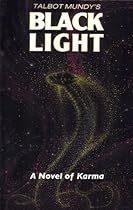
About the AuthorTalbot Mundy was one of the premier writers of adventure stories in the first half of the 20th century. how do you read in one day Black Light
0 of 0 people found the following review helpful. The Restored, Uncut Version of a Mundy ClassicBy Brian TavesBy the end of 1929, Mundy was frantically hurrying to complete his new novel, eventually entitled Black Light. When his American publisher received it at the beginning of the year, they promptly made two demands: that the 123,500 book be cut by one-fifth and eliminate the swearing by the hero. No magazine serialization ever took place, and Black Light neglected to include the action ingredients that would appeal to the generic minded pulps and other fiction magazines.In shortening the book, Mundy's publishers in the United States deleted the sayings, which only appeared in the British edition. Fortunately, the publishers of the Ariel edition of Black Light have included the sayings previously denied to American readers. (Be sure to buy Ariel's 2006 version; they republished their 1991 edition when they learned from my 2005 Mundy biography of the differences in the British and American texts, and are to be commended for restoring the textual integrity of Mundy's writing.)Many of the poems and particularly the sayings between chapters are in a different style than other such Mundy work. The sayings are "From the Book of the Yogi-Astrologer Ram-Chittra Gunga Sahib," and in many cases are virtually essay-length. Subjects covered include virtue, love, wisdom, critics, the soul, reincarnation, motherhood, evolution, imagination, karma, prisons, science, spirituality, materialism, astrology, science, the laws that govern the universe, whether there is a god, and the clash of different cultures despite their underlying unity. All make explicit the debt his literary and religious thinking owed to teachers of all faiths, most notably mixing the words of the Bible and Jesus into an Eastern context, urging Westerners to understand the teachers of their own culture before turning to Eastern faiths.Black Light is a morality play, without intrigue, as Mundy seeks to merge the dual ingredients of the psychic and psychological. Unlike previous novels, Mundy presents a familial situation, of a very disturbing nature, and offers a full-fledged romance as a principal element. Joe Beddington is a new type of hero for Mundy. He is a twenty-eight year old, living under the iron rule of his mother. Joe's mother is a woman who has learned to ruthlessly manipulate governments and defraud labor with the same skill with which she keeps her son subject to her will. Mrs. Beddington is intended to represent domination of any sort by one person using others for their own ends. Mundy uses classical allusions in describing her, explaining that she is a symbol, a Clytemnestra, only to be overcome by being slain, although that is not the action Joe can or will take, tempted though he is. Unfortunately, this prosaic Freudian formulation, with its requisite and necessary rebellion, seems trite for modern readers. It is a weak base for the wisdom teaching that Mundy imbues throughout the novel and detracts from the other, more unusual aspects of the narrative.While the harsh portrait of Mrs. Beddington goes against Mundy's usual favorable treatment of willful women characters, she is contrasted with Amrita and Annie, two women of India. Amrita's parents died at birth, and she has been reared by native priests, wisely, outside of the western influence. She can read people's auras, know their mood, nature, and intentions.Like most of Mundy's sages outside of Tsiang Samdup, the Yogi-Astrologer Ram-Chittra Gunga Sahib is a man the reader may admire, but one who it is difficult to like. The Yogi has largely removed himself from society, and accepts the fact that his wisdom cannot be understood by most of the searching souls around him. He knows better than to interfere with destiny, and so cannot prevent evil, but continually appears at all the crucial times when he is truly needed.'Rita is the first girl to interest Joe, and uncertainty coupled with fascination and the mystery of her mind and learning soon cause him to fall in love. Mrs. Beddington tries to convince Joe that 'Rita is not the daughter of her bridesmaid, and threatens disinheritance if he persists in his love for 'Rita. Mrs. Beddington's gossip goes beyond besmirching the reputation of 'Rita, to become linked with the misrule of the Maharajah Poonch-Terai. She also uses colonial power, attaching herself to a spineless British official, Cummings, who is all too eager to sell himself to her in return for a life of dominated ease. The materialism and greed she elicits contrast with the Yogi's benign spirit, representing opposite poles of humanity.Within the sanctuary of the temple, the Yogi gathers the principals, while an unseasonal storm rages outside. The Yogi tells them they have challenged destiny and he demands judgement. Strangely the doors lock, and pistols jam. In the subsequent five chapters the characters together experience the black light the yogi creates. Through the black light, in absolute darkness, whether eyes are open or shut, each sees their own life in intimate review. Each judges themselves, seeing as much of their own guilt as their soul allows.Complex, ambitious, and only sometimes successful, Black Light is still one of Mundy's deepest and most rewarding novels. It is a story rich in fascinating philosophy and rewarding teaching, although these elements are not as noticeable as usual, particularly because of the mix of the Yogi's pronouncements combined with Joe's hesitant internal monologues. However, the frequent brilliance of Black Light is undercut by narrative flaws and clichd situations that keep it from being great. Delicately balanced between profundity and an excess of stereotyped characters, some sections of the book sadly fail to keep up the standard. Nonetheless, Black Light is one of Mundy's most worthwhile and daring novels, representing an occasion on which he discarded some of his usual tendencies and created one of his most memorable, if still imperfect, works.